The Best Business Books You Need To Read

In this article I am going to compile a a list of books that have influenced my financial well-being in an incredible way. All of these books will help you learn about: investing, money management, personal finance and wealth building. I cannot recommend these books enough, they have truly made a massive impact on my finances, wealth building, and my money mindset. Without further ado let’s get to the list!

  1. “The Millionaire Next Door” In this book Stanley and Danko discuss and analyze the habits and lifestyles of millionaires. Although most people believe millionaires live extravagant lifestyles, this book debunks that myth and shows that millionaires live in a similar fashion to average people, and yet completely different at the same time. The book breaks down the traits of millionaires into 7 main topics:
    • 1. They live well below their means.
    • They allocate their time, energy, and money efficiently, in ways conducive to building wealth.
    • They believe that financial independence is more important than displaying high social status.
    • Their parents did not provide economic support.
    • Their adult children are economically self-sufficient.
    • They are proficient in targeting market opportunities.
    • They chose the right occupation.

The book dives into these topics in extreme details to show that Millionaires could be hiding in plain-site all around you, and if you follow the principles outlined in the book you will become millionaire too.

Buy It On Amazon>>

2. ” The 10X Rule” This amazing by Grant Cardone discusses how to become successful, and why it is your obligation to become successful. The 10X Rule says that 1) you should set targets for yourself that are 10X greater than what you believe you can achieve and 2) you should take actions that are 10X greater than what you believe are necessary to achieve your goals. The biggest mistake most people make in life is not setting goals high enough. Taking massive action is the only way to fulfill your true potential. Although this may seem like an insane strategy for setting goals the book explains why it is important to set your goals high. This book is perfect for anyone wanting to become successful in any area of their life, wether it’s personal finance, Realestate, building a business empire, or having a happy marriage.

Buy It On Amazon>>

3. ” The Intelligent Investor” by Benjamin Graham is a stock investors dream. Warren Buffet called this book the “by far the best book ever written on investing” This book teaches how to analyze, buy, research, and build wealth in the stock market. Benjamin Graham “The father of value investing” is an incredible teacher and mentor, clearly since he was Warren Buffet’s teacher and coach. Anyone will who reads this book will receive extraordinary value and knowledge. “The Intelligent Investor” will teach beginner investors and those who are more advanced, to build wealth in the market safely and efficiently. This book has completely changed how I do my stock investing is a must read for anyone who owns even a single share of stock.

Buy It On Amazon>>

4. “How to Win Friends & Influence People” by Dale Carnegie. Carnegie is one of the most influential people who has ever lived, and he credited the vast majority of his success to the principals he teaches in this book. In this book Carnegie instructs the reader and teaches them to be a master networker, and be loved by everyone. The book discusses many principles to deal with people and come to agreements that suit your needs and solve problems. The art of relationships and Human interaction is an incredibly important skill to master. After all, the two largest leverages in life are other people’s money and other people.

Buy it On Amazon>>

That is my list of books that everyone who wants to be successful, in any area of their life should read. These books do not simply teach you processes, principals, and skills to help you achieve great things, they also instill a drive that will motivate you to accomplish everything you are capable of.

The links used on this post are affiliate links, you do not pay more because of this, but I do make a small commission for advertising the products. I stand by each one of these books, as they have taught me a lot and I would not promote something I do not believe in.


How to Make an Effective Budget for Teenagers

Budgeting is one of the most powerful and yet simple steps toward financial wellbeing and security. Although budgeting may seem like an unimportant waste of time, it is the easiest and fastest tactic you can apply to improve your financial health. Unfortunately only 50% of Americans 22 years old or under have and keep track of their budget. when surveyed only 19% of Americans said they thought it was important to have a budget. Unsurprisingly those 19% who said it was important to have and maintain a budget are probably much better off financially than everyone else, so lets learn how to:

  1. Make a budget
  2. Maintain/Adhere to the budget
  3. and how to make it easier to manage and stick to the budget.

1. How To Make Your Budget

The process of actually making a budget is incredibly easy, I like to break it down into three simple steps:

  1. Calculate your income and your expenses
  2. Determine your priorities
  3. Decide on exact percentages

Calculating your income and expenses:

Again an easy process, simply calculate your monthly income and your monthly expenses and then subtract the expenses from your income, we will call this our “surplus.” Hopefully the number that appears on your calculator is not a negative number because then you have a “deficit” but if it is you either have to cut some expenses or make more money. If you do not have exact numbers for your monthly income and expenses simply take the last six months worth of income and then find the average and then do the same with your expenses. Now that you have your surplus you are ready to move onto the next step.

Determine Your Priorities:

This is when some of that cutting might come into play, if you’re monthly number was negative you are going to have to decide on something to cut or make more money, if you do not want to cut anything out/can’t cut anything out than checkout my post about making extra money from a side hustle

In this step you also need to consider if there is anything you are going to have to save for such as a new car, phone, tires, rent, or anything else that would require saving for. If you know you need a car and that you need to start saving for it then mark it down as a top priority. Deciding on priorities greatly affects step #3 and is an important aspect to any budget.

Decide on exact percentages:

Now that you have a list of priorities and have found your surplus it is now time to actually divide your surplus and decide where it is going to go. A common place to start is a 50/30/20 = 50% for necessities, 30% for savings, and 20% for wants. I also highly recommend investing if your income allows it (tip: you can easily invest with $20-$30 per month) and if you decide to invest, alter the percentages accordingly; also checkout my post on the basics of investing for teenagers. A good place to start for investing is 15%; however this amount needs to be tailored to what you can afford. using myself as an example: I don’t spend very much on wants other than eating out a few times per month so 20% for wants is way too high, 50% for necessities is also high for me so I take 10% from necessities and 5% from wants making my budget a 40/30/15/15 = 40% for necessities/expenses, 30% for savings, 15% for wants, and 15% for investing. Although this budget works for me it does not mean that it will work for you so please take my examples and adapt them to fit your needs, generally however I would recommend staying as close to the 50/30/20 breakdown as this allows you to spend some of your money on fun things and wants, while still saving a large portion of your income.

2. Managing The Budget

Managing your budget is not very complicated especially with the apps and programs available today. here are a few of the best ways to keep track of and manage your budget:

  1. Use a budgeting app such as YNAB (You Need A Budget), Mint, Wally, or one of the many other apps available. These services will automatically connect to your bank accounts, investment accounts, debit cards, and credit cards to update you on your spending and saving. Most of these apps also allow you to set goals and budgets for each individual category such as: $80 for gas this month or $175 on groceries for the month. Some of these (such as YNAB) are a subscription service that charge you monthly for access to the software, however Mint and Wally are both free and there are many free options available.
  2. Go the old-fashion route and use Excel or Numbers (Numbers is the Mac version of Excel.) While these take some getting used to it is fairly easy to learn how to use these forms of software
  3. Use the envelope system. basically after you pay off all of your necessary bills such as: rent, water, electric, insurance, etc. take the remaining categories like: food, entertainment, clothes, etc. and assign each envelope one of these categories. once you have all of your envelopes calculate the amount of cash you need/want for each one and put it in the envelope, once the money is gone that’s it you are done spending money in that category.

Managing your budget may seem like a chore, but with some patience and practice it can actually be fun and feel good to know where all of your money is going and that you are becoming healthier financially.

3. Adhering To Your Budget

Maintaining and adhering to a budget can be difficult, but I have a few tips to help you never break your budget or lose track of your money.

  1. Set realistic goals to stay motivated. this could be something as simple as trying to reduce your “wants” percentage by 5% for a month or trying to reach a certain milestone number for savings such as $1,500 in the bank by this day next year. These goals will help you follow your budget and turn it into a game that can actually be quite fun. I definitely fixate on my budget much better when I have a goal in mind.
  2. Check your budget multiple times per week/month. This will depend on the person, but I find I am much more motivated to stick to my budget when I actually see the numbers and know where I stand, this also helps me know when/if I will have some extra money that I can spend on something or add to my savings.
  3. USE CASH MORE! Using cash and actually having to hand someone else your money when you buy something hurts a lot more than swiping a piece of plastic. If you do not like cash or it is simply unrealistic to use, try checking your account balance every time after you swipe your card so you see how much money you actually spent.
  4. Convert the price of things into the amount of hours of work it would take to purchase. For example: if an iPhone case costs $20 and you make $10 per hour, don’t think about it costing $20 dollars, instead think about having to work for two hours only for a phone case.

Congratulations!

You now have a fully functioning budget that will allow you to monitor your spending, saving, and investing habits. Knowing exactly where 100% of your money goes is an amazing feeling and a great habit to form at a young age that will help you advance other areas of your finances as well. If you start budgeting as a teen you will be far ahead of almost everyone your age and a large portion America.

How to Invest Effectively Under the Age of 25

Investing as a teenager or young adult is an INCREDIBLE way to build your wealth and prepare for your future. Unfortunately investing under the age of 18 can be difficult, not impossible, but there are more hoops to jump through. With that being said, these hoops are absolutely worth the trouble because time is one of the most influential aspects of investing returns, and how much money you make in the long run. In this guide I will explain the basics of investing as a teen or young adult.

Before we really dig in I want to talk about investing as a whole. Investing is one of my greatest passions, I find the topic incredibly interesting and have been researching it since I was 8 years old. Investing is one of the most incredible ways to prepare for your future as a teenager or young adult, because of time and compound interest

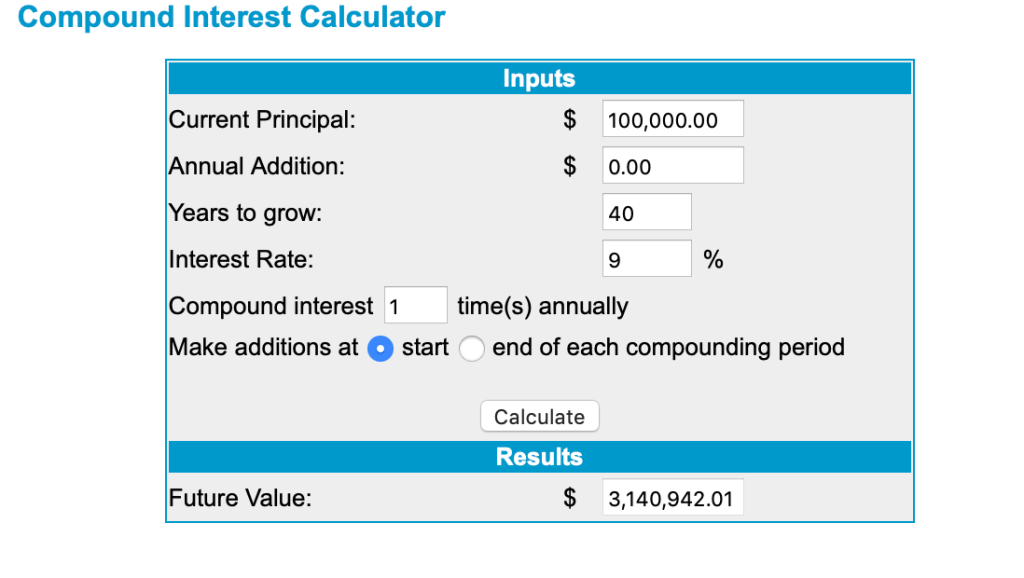
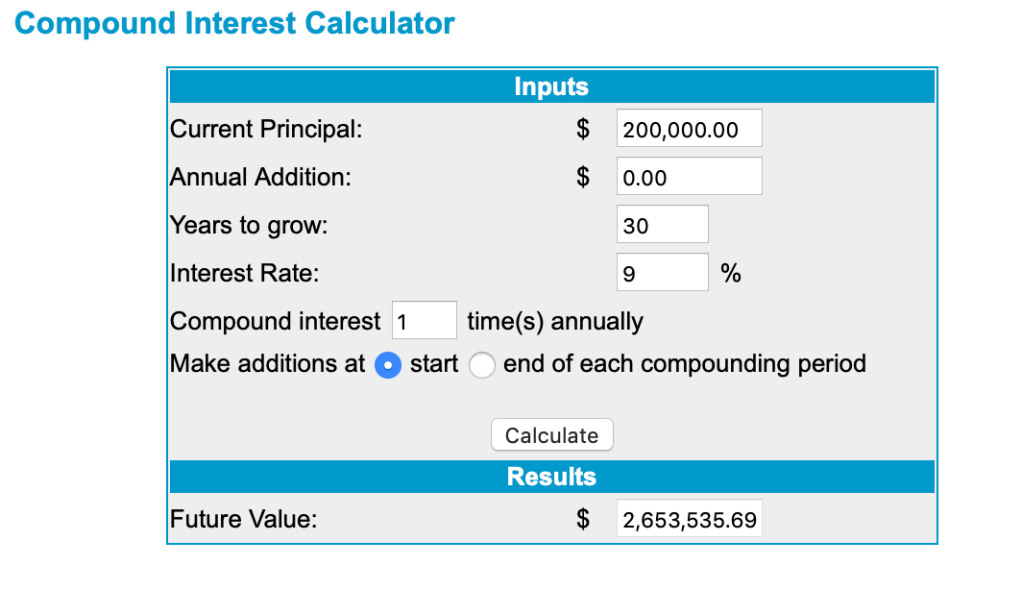
  • Time: Time is the single largest factor to help your money grow! if you invest a smaller initial amount, but it is invested longer it will grow and turn into a larger amount of money than a larger initial amount invested for a shorter time. It is difficult to explain in words so lets use this example instead: if Jake makes an initial investment of $100,000 in the stock market, earning on average 9% interest per year for 40 years it will grow into $3,140,942.01, but if Jane makes an initial investment of $200,000 with the same 9% return, but she only invests it for 30 years it would tun into $2,653,535.69 even though Jane invested double what Jake invested she made almost $500,000 less than Jake! I used the “money chimp” compound interest calculator for both of these examples. Here’s a link: http://moneychimp.com/calculator/compound_interest_calculator.htm
  • Compound Interest: Compound Interest: Because of our age another aspect we have an incredible advantage in is compound interest. Albert Einstein has a famous quote that summarizes compounding interest perfectly: “Compound interest is the 8th wonder of the world.  He who understands it, earns it; he who doesn’t, pays it. Now let’s define compounding interest: “Compound interest (or compounding interest) is interest calculated on the initial principal, which also includes all of the accumulated interest of previous periods of a deposit.” Basically compound interest is when you earn interest on the principal you invest PLUS the interest you earn and that interest. For example: in our previous example Jake made a principal investment of $100,000 and earned 9% interest annually, so after the first year he had $109,000 but after his second year he is earning interest on the $100,000 AND the $9,000 so his after the second year he has $118,810 As you earn more and more interest you will make even more interest on that interest and the loop continues. In this example the change is small but on a large scale this becomes POWERFUL. Compound interest is the real reason why time affects investments so drastically, the longer money is invested the more powerful compound interest becomes.

Investing accounts: Before you actually start buying bonds or stocks you have to have an account to buy them and hold them in. Investing is a complicated subject and one of the most intricate subjects within investing is what type of account you hold your investments in. There are many types of accounts and even apps you can use to invest with. For this article we will focus on three types of accounts: Apps, IRA’s, and (UGMA’s and UTMA’s.) Technically UGMA and UTMA’s are different, but for our purposes I am grouping them together because they are very similar.

  • Apps: Investing apps are an incredible way for teens and young adults to invest. Stockpile is currently the largest app that allows minors to invest. If you are over the age of 18 then you can also youse Acorns, Robinhood, or Stash. The reason Stockpile is so great for young investors is the ability to buy fractional shares of your favorite companies. For example: currently (Dec, 2019) amazon is trading at $1,760.94 per share, so if I was on any other trading platform I would have to have $1760.94 before I could buy one share of amazon! most teenagers and young adults don’t have that kind of money just lying around, but with Stockpile you can buy a portion of that share, so lets say you only have $100 to invest, Stockpile will allow you to buy only $100 worth of amazon stock which is about .06 of a share. This ability allows young investors who don’t have tons of cash, to buy the stocks they want to buy, instead of settling for a different stock.
  • IRA’s: This is my preferred way to invest as a teenager due to the tax advantages. Although it is important to note that you have to have an earned income to use one of these accounts. IRA stands for “Individual Retirement Account.” An IRA is an investment account used only to invest for retirement. There are two main types of IRA’s: a “Roth IRA” and a “Traditional IRA.” Both of these accounts are used for retirement investing, so when money is invested in one these accounts, it has to stay in the account until you reach the age of retirement which is 59 1/2 years old, if the money is removed early it will be penalized by a 10% tax. Roth IRA’s provide the best tax benefits and advantages; however, some people have specific reasons for using a Traditional IRA over a Roth IRA. The basic difference between the two accounts is when your money gets taxed, in a Roth your money is taxed when you put it into the account and is not taxed when the money is removed, vs. a traditional IRA that taxes your money when you take it out of the account and not when you add it into the account. Although this seems like a minor difference it is actually quite important. The reason why is because your money is going to grow massively inside the account. I recommend reading Investopedia’s article on Roth IRA’s because it is far to difficult to explain in this article. Here’s a link: https://www.investopedia.com/can-teenagers-invest-in-roth-iras-4770663
  • UGMA’s and UTMA’s: These accounts are basically just custodial accounts for people under the age of 18, Here’s a link to explain these accounts: https://www.thebalance.com/beginners-guide-to-ugma-and-utma-custodial-accounts-4060475

Now that we are past the boring part we can start talking about how to actually invest! Once you have your account open you have to decide what kinds of funds you are going to purchase inside of your account.

Types of investments: Now let’s start talking about the ways you can actually invest. There are many many different ways to invest, but we will focus on the three largest forms: Stocks, Index Funds, and Bonds.

Stocks: Companies issue stock to raise money. When someone buys a share of stock they are giving their money to the company and in return they receive a very small portion of ownership in the company (technically this depends on if it was bought in the secondary market or the primary market, but for this guide we will not worry about this.) Most companies issue millions and millions of shares so it takes an incredible amount of money to own a meaningful amount of a company.

Index Funds: An index fund is a type of mutual fund with a portfolio constructed to match or track the components of a financial market index, such as the Standard & Poor’s 500 Index (S&P 500). An index mutual fund is said to provide broad market exposure, low operating expenses and low portfolio turnover. These funds follow their benchmark index no matter the state of the markets. An index fund trades like a stock, but it is actually a cumulation of multiple stocks.

Bonds: A bond is just a loan, when you buy a bond you are loaning the money to the issuer of the bond and after a determined amount of time your money will be paid back to you plus interest. companies issue bonds (corporate bonds) and governments issue bonds (government bonds or treasury bonds.) with bonds you do not own a piece of anything, you are only loaning money. Bonds are typically considered the less risky of the three types of investments.

Typically the more risk involved with your investment, the higher rate of return you will make. For example if you only invest in stocks you will probably make a larger return than someone who only invests in bonds. Although you can never be sure this is true most of the time. As teens and young adults we can use this risk to our advantage. Since we have such a long time to hold our investments we can increase our risk, my personal investment account is made up of 100% stocks and as I move closer to retirement I will start transitioning to a 75% stocks and 25% bond make up for my portfolio and continue shifting more and more toward bonds. This is because when I am young it does not matter if the market collapses and I lose a large portion of my portfolio, because I have more than enough time to regain my money, but if Liam two years away from retirement and I still have 100% stocks and the market collapses I have very little time to regain that money.

This completes my basic guide to investing, I did not want to go too in-depth, instead I wanted to explain the main topics so that you have the building blocks to continue learning about investing. If you wish to continue learning I highly recommend using Investopedia.com, research each of the larger specific terms I used in this article and you will learn great deal about investing.I can not emphasize how incredible the opportunity to invest as a teenager or young adult truly is. The advantages that we have because of our age are unique and powerful, I highly recommend investing as a teenager!

I am not an investing professional or a financial advisor. this article is for learning purposes only, this article is not financial advice and any actions taken by the individuals who read this article are not my responsibility.

How to Save Money on a Car for Teens

For teens a car is probably one of the largest expenses in their life. The massive, initial price of buying a car, in addition to the maintenance, gas, and insurance, are all budget-breakers for teenagers working a part time job or no job at all. In this guide I want to address all of the major expenses involved in owning a car, and how to minimize them efficiently.

Car expenses can be broken down into five major categories:

  1. Price of the car
  2. Insurance
  3. Gas
  4. Maintenance
  5. Depreciation

First category: Car price

Car price is a difficult barrier for owning your own car. Many teens have little to no savings, because they have no way to drive to a job. for ways to make money as a teen check out my previous post: https://thefiscalteen.finance.blog/2019/11/24/making-money-as-a-teen-is-easier-than-you-think/ Saving for a car is difficult, but there are many ways to fast track your savings. Here are some options:

  • Talk to your parents about saving for a car. While I personally think its bad for parents to buy their children a car, talking to your parents and setting up a “savings matching plan” where your parents match how much you save could be beneficial. For example: if you saved $200 per month from various jobs, your parents would match that and give you an additional $200, bringing your savings total to $400 per month. Another option would would be to ask for money as birthday and Christmas presents instead of the usual gifts.
  • Although talking to your parents can be beneficial, it only gets you so far. The other largest way to minimize the price of a car is to shop around and negotiate. there are many options to find cars at a reasonable price. CarGurus.com is one of my favorites, but Cars.com and other sites work well too. Don’t be afraid to drive a little ways away to save some money on the price either. Negotiating is another large part of bringing the price down. You never know unless you ask/talk about it with the sales person or dealership, but trying to negotiate can never hurt.

By limiting the actually price of you car you can keep more of your savings or reduce your loan payment which will drastically help later on.

Second category: Insurance

Insurance will likely be the largest monthly expense behind an actual car payment for teens, especially for males, but insurance cost is dependent on a plethora of factors. here are some of the best ways to keep insurance costs down:

  • Consider what type of car you buy. Trucks, “sporty” cars, red colored cars, expensive cars, and turbo or supercharged vehicles will have much higher insurance prices. if you are only buying a car for transportation, then the best type of car to buy is a used car that is 1-6 years old (this will depend on your budget), is not a truck or a “sport” vehicle, gets good gas milage, and is from a reliable brand, but not a luxury brand such as BMW or Mercedes.
  • Raise your comprehensive and collision deductibles. By raising the deductible your monthly insurance payment will go down, but I if you are involved in a wreck you will have to pay more out of pocket.
  • Get good grades in school (B’s or higher), many insurance companies will lower your rate if you have good grades in school
  • Training class discounts. insurance companies typically offer a discount on your monthly rates if you attend a driving training course. these courses typically only cost $100-$200 and will save you much more than that in the first year of the discount. (Your parents might be willing to pay for this, since it helps you become a safer driver)
  • “Away” insurance breaks. If you are going to be in a different state or out of the country for a month or more without your car, some companies will reduce your payment drastically since you will not be using your vehicle.
  • Enroll in driving “tracking”, these programs will either attach a piece of hardware that the insurance company owns to your steering column or they will make you have an app open on your phone wile you’re driving. The app or hardware will teach your speed, acceleration, braking, turning speed, and a few other factors to determine how safely you drive. if you are deemed a safe driver they will discount your monthly payment.

Third major category: Gas

Gas is another incredibly large expense for owning a car. Personally I own a truck so my gas expenses are usually $100-$140 per month! Here are the factors and best ways to save on gas:

  • The absolute largest factor for your monthly gas bill is what type of car you own. Pay close attention to the MPG of any cars you are looking into buying.
  • Driving style is the second largest factor. The way you drive also affects how much gas you use considerably. accelerate slower, brake sooner, coast as much as possible, and shift your car into neutral when going down hills to save gas. Also take advantage of your cars gas consumption feature. many new cars will have a way to access a graph or bar scale that actively shows you what milage you are getting.
  • Car maintenance. maintaining your car also increases gas mileage. change your oil when it is necessary to do so, clean your air filters frequently and replace them when needed, keep your tires properly inflated (this also reduces tire wear)

Forth major category: Maintenance

  • The absolute best way to reduce maintenance costs is to preform routine maintenance. Do not push off or wait to preform necessary maintenance, as this will make it more expense and cause worse problems in the long run. read your cars manual and stay up to date on everything that is necessary.
  • Use an independent mechanic or preform some things yourself. The mechanics at the dealership are almost never cheaper and they usually don’t do a good job. Instead go to an 3rd party mechanic. Routine things such as oil changes, air filter replacements, and even brakes jobs can all be done quite easily with a quick tutorial on YouTube, so get your hands dirty and save some money!

Fifth major category: Depreciation

I won’t go into depreciation very much at all because there is little you can do to stop this. Obviously as your car gets older it loses value, the only way to minimize this is to take care of your car and drive safe, try not to scratch or dent your car, and maintain it so there are no mechanical problems.

Hopefully this guide has helped you learn about the many different expenses involved in buying and owning your first car, but also how to minimize those expenses and save money every month.

Making Money As a Teen is Easier Than You Think

In 2019 there are many ways for ambitious teens to make money. They all require hard work and perseverance, but they work incredibly well and will help you make more money. Here I have compiled 3 of the best, easiest, and most lucrative ways to make money as a teenager. I am also adding in tips and tricks to make them even better for you. All of these options require little to no experience or initial investment and will turn a profit quickly. Let’s make some money

Method #1: Flipping/Selling on Ebay

Selling on Ebay is an incredibly lucrative and takes very little effort. Sell items you already own and don’t use anymore or buy items from garage sales and Goodwill to flip. I personally started by selling a few items that I haven’t used in months or even years, I made over $300 in 7 days selling these items on Ebay. After I received the money from these sales I wen to Goodwill and local garage sales to find items to flip. Handbags, shoes, bakeware, mugs, and even stuffed animals are all highly profitable. The key to flipping items specifically on Ebay is to be picky about what you buy. it is also important to do your research so you know what sells well.

Here is my best advice for success with Ebay selling:

Tip#1: Research, Research, Research

Research is the single most important factor when it comes to making a profit on Ebay, this Is because it allows you to be picky and know what is going to sell and what is not. On the Ebay home page search for a product you would typically find at a garage sale. I will use coffee mugs as an example. Once you search for “Coffee Mugs” click on “Advanced” to the far right.

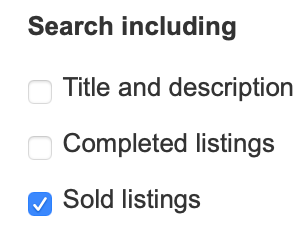
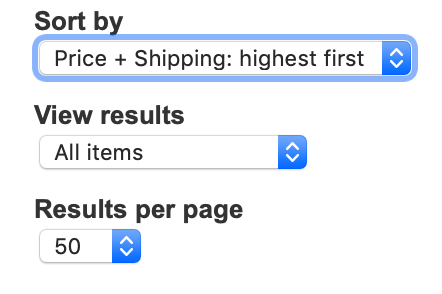
In the “Advanced” section make sure you select “sold item” and then sort by “price highest to lowest”

by looking only at the highest selling items for the search “coffee mugs” I will look at the first few pages and start to find patterns about what is selling for a high price. in this case it was “Hermes” brand coffee mugs which will be very difficult to find at garage sales, but this coffee mug by “Death Wish Coffee co.” was sold by many people for up to $275 dollars!

The research involved can be time consuming, but it will pay off in the end when you know what to look for and happen to see a coffee mug like this one at a garage sale for $5.

Tip#2: practice your negotiation skills at garage sales. Do not just assume you have to pay the price listed instead ask for a lower price and then make even more from selling it because you paid half of what the person wanted.

Method #2: Have a Garage Sale

Garage sales are an incredible way to get rid of junk you don’t need and make money in the process, they are easy to set up, profitable, and you can practice your negotiating skills here as well. I do not have many tips for this method other than DO NOT underestimate garage sale, everything sells and you can usually get a decent profit.

Method #3: Start a Serviced Based Business

It is hard for teens to start companies that sell products for many reasons, but a service based business is easy to start and very, very profitable. A serviced based business is anything that sells someone the service instead of the product.

  • Lawn mowing
  • Pressure Washing
  • Weeding
  • Walking Dogs
  • Dog Poop Removal
  • Shoveling/Blowing Snow
  • Trimming Bushes
  • Car Washing
  • Car Waxing
  • Car Vacuuming

This is a VERY short list of some of the available services based businesses you could start. I have been mowing grass since I was 11 years old for my neighbors, people I know, and even my own parents. I generally make an extra $1,000-2,500 per year by mowing 1-2 yards twice per month. I used to have 3-5 yards , but I am much busier now than I used to be.

Tip#1: Bundle services together

If you decide to mow lawns and one of your customers has a dog, offer to remove the dog poop for an extra fee. If you mow lawns offer to trim bushes as well (if you have the equipment of course.) Many different things that you wouldn’t realize can be bundled to increase profits.

Tip#2: advertise on your neighborhood’s Facebook group.

Many neighborhoods have their own private groups on facebook, make a post describing your service, and a good way to reach you. this will put your business infant of a lot of potential customers, who are all very close to you.

Tip#3 advertise at your yard sale, hand out flyers or just set up a table with some information.

Hopefully these methods help some of you make more money. I did not include anything about drop shipping or selling Redbubble because they do not work very well. the reason I chose these three methods over more “modern” approaches is because my methods actually work and they are reliable. I have been selling on Redbubble for over 6 months now and I have only made $.66 even though I have put many hour into making designs and setting up my page. if I had been mowing grass in the time it took me to set top my Redbubble store I could have made hundreds of dollars.

Work hard, be patient, and these methods will work for you, I know it

My First Blog Post

Hello everyone, this is my first ever blog post. I will start by saying that I am a terrible writer and English is my least favorite subject by far. With that being said I think writing about an enjoyable subject such as finance will make the writing easier for me, and ultimately its the content that matters not how it is presented. Now on to the more enjoyable section. Welcome to my blog! I am 17 years old and I am obsessed with all things business, finance, and investing. My goal with this Blog is to provide enjoyable content and hopefully to teach/inspire other teens to take money more seriously. I am by no means an expert with money so I do not know how much teaching I will be able to besides helping others learn from my mistakes or if I discuss topics that help others learn. so that’s it I hope the few who see this blog will enjoy it. please follow me on Instagram: “TheFiscalTeen” and send me topics you would like me to talk about. Now I am going to go watch The Godfather because it is the best movie ever created. Thank you!

About Me:

Hello. I am 17 years old and I love finance. Ever since I was a little kid I have been inspired to learn more about the great world of finance and now I hope I can help others learn too. You may ask why I was always so passionate about money, which is a great question. When I was 8 years old I distinctly remember driving in the car and my dad was telling me about stocks. When I turned 1 year old my Godfather gave me a single share of Disney stock. My dad was explaining to me what that meant and how the stock market worked. As soon as I heard that I owned part of The Walt Disney Company… I was hooked, even though my dad explained how little I owned by saying “you know that piece of gum stuck on the ground right when you walk into The Magic Kingdom? You own a grain of sand under that piece of gum.” It didn’t matter, I loved the idea and immediately started doing research on the stock market, investing, and finance. I attribute a large amount of my passion for finance to that share of stock, which I still have today, framed and hanging on my bedroom wall. Thats the story of my passion for anything to do with money. Now onto the blog.

Question #1: why am I doing this?

Answer: I have never been a good writer, but I believe that teens need to be more educated about finances and how to manage money. I think it is one of the single most important aspects to their lives and it is not being taught by school and rarely by parents, I hope this blog will help others learn about finances and allow me to learn as well.

Question#2: If you’re a bad writer why did you want to start a blog?

Answer: I don’t think that being a bad writer limits me, the content is the most important aspect of any blog, movie, video, or book. I strive to provide good content and hope that my writing will strengthen as I continue blogging.

Question#3: Why should we be learning from a teenager instead of an expert?

Answer: I believe I can provide much more insight into what it is actually like being a teenager and handling your finances in this day and age. By having an inside perspective I will be able to provide more value to my readers. I am not an expert, but I will be doing a great deal of research before sharing what I have found with my readers. I do not want to mislead anyone who reads this blog.

I hope that my blog will help many people (teens or adults) and that it will be enjoyable and provide incredible value.

Design a site like this with WordPress.com
Get started